
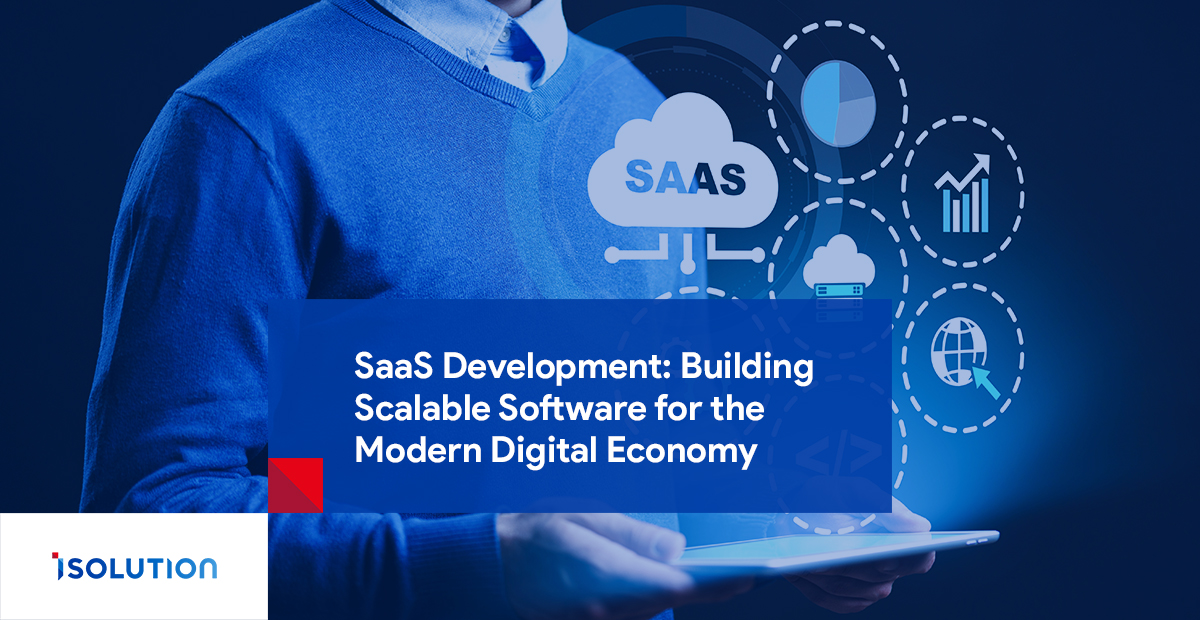
Software as a Service (SaaS) has fundamentally reshaped how organizations build, deliver, and consume software. Instead of installing and maintaining applications on local infrastructure, businesses now access software through the cloud,on-demand, scalable, and continuously updated. This shift has not only reduced operational complexity but has also enabled companies to innovate faster and serve global users with minimal friction.
SaaS development is the backbone of this transformation. It involves designing, building, and maintaining cloud-based applications that are accessible via the internet and typically offered on a subscription basis. As organizations increasingly adopt cloud-first strategies, understanding SaaS development is essential for staying competitive in today’s digital economy.
What is SaaS Development?
SaaS development refers to the process of creating cloud-hosted applications that users can access through a web browser or mobile interface. Unlike traditional software models that require installation and manual updates, SaaS applications are centrally hosted and managed by the provider.
Key characteristics of SaaS applications include:
- Multi-tenancy architecture: A single instance of the software serves multiple customers while keeping their data isolated and secure.
- Scalability: Resources can be dynamically adjusted based on demand.
- Subscription-based pricing: Users typically pay monthly or annually instead of purchasing a perpetual license.
- Automatic updates: New features and security patches are deployed centrally without user intervention.
- Accessibility: Available from any device with an internet connection.
These features make SaaS one of the most efficient and widely adopted software delivery models globally.
Core Architecture of SaaS Applications
Building a successful SaaS product requires a strong and well-planned architecture. The main components typically include:
1. Frontend Layer
This is the user interface where customers interact with the application. Modern SaaS products often use frameworks like React, Angular, or Vue.js to deliver responsive and intuitive experiences.
2. Backend Layer
The backend handles business logic, authentication, data processing, and integrations. It is usually built using scalable frameworks such as Node.js, Java Spring Boot, Python Django, or .NET.
3. Database Layer
SaaS applications rely heavily on databases that can support multi-tenancy and high availability. Options include relational databases (PostgreSQL, MySQL) or NoSQL databases (MongoDB, Cassandra).
4. Cloud Infrastructure
Cloud platforms such as Google Cloud Platform, AWS, or Microsoft Azure provide the foundation for hosting SaaS applications. They offer elasticity, global reach, and built-in security features.
5. APIs and Integrations
Modern SaaS products are API-driven, enabling integration with third-party services like payment gateways, CRM systems, or analytics tools.
Key Principles of SaaS Development
To build successful SaaS applications, developers and organizations must follow several core principles:
1. Scalability First
A SaaS product must be designed to handle growth—both in users and data volume. This often involves microservices architecture, load balancing, and containerization (e.g., Docker, Kubernetes).
2. Security by Design
Since SaaS applications handle sensitive user data, security is critical. This includes encryption, identity management, secure APIs, and compliance with standards such as GDPR or ISO 27001.
3. Continuous Delivery
SaaS thrives on frequent updates. DevOps practices, CI/CD pipelines, and automated testing ensure that new features can be deployed quickly and safely.
4. High Availability
Downtime directly impacts user trust. SaaS platforms are typically designed with redundancy, failover systems, and distributed cloud infrastructure.
5. User-Centric Design
The success of a SaaS product depends heavily on user experience. Simple navigation, fast performance, and intuitive interfaces are essential for retention.
Benefits of SaaS Development for Businesses
SaaS development offers significant advantages for both providers and users:
- Lower upfront costs: No need for heavy infrastructure investments.
- Faster time to market: Applications can be deployed quickly on cloud platforms.
- Global accessibility: Users can access the application from anywhere.
- Predictable revenue model: Subscription-based pricing ensures recurring income.
- Easier maintenance: Updates and bug fixes are handled centrally.
- Improved collaboration: Cloud-based tools enable real-time teamwork across locations.
These benefits explain why SaaS has become the dominant software delivery model across industries such as finance, healthcare, education, and retail.
Challenges in SaaS Development
Despite its advantages, SaaS development comes with its own set of challenges:
- Data security and privacy concerns
- Complex multi-tenant architecture design
- High dependency on cloud providers
- Performance optimization at scale
- Integration complexity with legacy systems
- Customer retention in competitive markets
Addressing these challenges requires a strong technical foundation, continuous monitoring, and a clear product strategy.
Future Trends in SaaS Development
The SaaS landscape continues to evolve rapidly. Several key trends are shaping its future:
- AI-powered SaaS: Integration of artificial intelligence for automation, predictive analytics, and personalization.
- Vertical SaaS: Industry-specific solutions tailored to niche markets (e.g., healthcare SaaS, fintech SaaS).
- Low-code/no-code platforms: Enabling faster development with minimal coding expertise.
- Serverless architecture: Reducing infrastructure management overhead.
- Enhanced API ecosystems: Greater focus on interoperability between platforms.
These innovations are making SaaS more intelligent, flexible, and accessible than ever before.
Conclusion
SaaS development is not just a technological approach, it is a strategic enabler of modern business growth. By combining scalability, accessibility, and continuous innovation, SaaS has transformed how software is built and consumed.
Organizations that invest in strong SaaS development practices are better positioned to adapt to market changes, improve customer experiences, and achieve sustainable growth in an increasingly digital world.
As cloud technologies continue to mature, SaaS will remain at the center of digital transformation strategies worldwide.
Reference
Mell, P., & Grance, T. (2011). The NIST Definition of Cloud Computing. National Institute of Standards and Technology. https://doi.org/10.6028/NIST.SP.800-145



Leave a Comment